
LEGAL
Privacy
Short version: a labelled banner ad on public article pages (see Advertising (banner) below), one cookie-free page-view counter from Cloudflare, one cookie only if you sign in (to comment or to send a paid star), and browser alerts only if you ask for them.
In short
- No advertising trackers. Page views are counted without cookies.
- Our own ads are measured with a one-way code of your IP address, never the address itself, and the data is deleted after 90 days.
- One cookie only if you sign in, and it lasts 30 days.
- We never store seed phrases, private keys, passwords, phone numbers, ID documents or bank details.
- In our chats Ari keeps counts and topic labels of how you take part, never what you write, and works out a value for each person. Only the owner and admins see it.
- Ask Ari and an admin deletes your record.
This website
- We count page views with Cloudflare Web Analytics. It sets no cookies, does not follow you across sites and builds no profile of you; it sees the page, the referring site, your country and your browser type. Apart from the banner described under Advertising (banner), no advertising trackers and no third-party fonts. Embedded posts and charts in an article (YouTube, X, Telegram, CoinGecko, TradingView and similar) load from those companies only when you scroll to them, and they have their own policies.
- No cookies unless you sign in to comment or to send a paid star. Then one cookie keeps you signed in for 30 days; signing out removes it. If Google ads are ever switched on, Google may set its own cookies on those pages, and we will say so in the cookie notice.
- Your browser remembers two small choices in its own storage: that you saw the cookie notice, and whether you said “not now” to alerts. They never leave your device.
- Our host, Cloudflare, processes your IP address to deliver pages and stop attacks. We don’t store it.
- Links to other sites (sources) open those sites; they have their own policies.
Advertising (banner)
Public article pages can show one banner from A-ADS, a third-party ad network. It is labelled “Advertisement”, sits outside the text of a note and is never shown in our Telegram chats. To show it, A-ADS’s servers load the banner in your browser, so they receive your IP address and browser details as they do for any web request, and they have their own policy at aads.com. An ad is never an endorsement: our research is not influenced by advertisers.
Sponsor pages (short links)
Some MintGraph short links, and some outside links inside our notes, open a short sponsor page on go.mintgraph.org before taking you on. Each is labelled “Sponsored page” and shows where you are going. It does not happen every time, and never more than a few times an hour.
To avoid showing you these too often, your browser keeps a small note on your device of when it last showed you one. It stays on your device and is never sent to us. Clearing your browser data removes it.
The ads on these pages come from outside ad networks (A-ADS, Adsterra and Monetag). Their servers load the ad in your browser, so they receive your IP address and browser details, and they may use their own cookies or similar technology. Their privacy policies apply to what they do. A sponsor visit opens an advertiser’s website in a new tab only when you tap.
We count, without any name, device or address, how often each ad unit was shown and how often it was tapped, to decide which ads to show. A click on a short link is counted the same way as on other MintGraph links: a code that changes every day, no IP address, deleted after 90 days.
Browser alerts
If you tap “Turn on alerts”, your browser gives us a private push address and two keys. That is all we store: no name, no email, no account. We use it to send a short notification when a research note is published or something important changes. Turn alerts off any time with “Alerts on · turn off” in the page footer, or in your browser’s site settings, and we delete the address. If a browser tells us an address is gone, we delete it too.
Comments
You sign in with Telegram through Ari. With each comment we store your Telegram id, your first name and profile photo (the only things shown), the text and when you wrote it. You can delete your own comments with the Delete button under them. Comments are checked automatically before they appear; links and spam are removed, and pictures are looked at by an image checker first. Repeated spam gets the person blocked.
Accounts removed for spam or abuse
In our Telegram chats, a person account whose username ends in “bot”, and a member who adds a bot to a group without being an admin, are banned and put on a blacklist so they cannot come back to any of our chats. For those accounts only, we keep their Telegram id, username, name and the text of the messages that got them removed, for up to 60 days, so we can report them to Telegram. We do not keep the messages of ordinary members.
Your page
If you sign in you get a page at /me. It keeps the name, username and picture you choose, the notes you save, and (only if you leave it on) the notes you have read to the end. Only you see your saved notes and history; the name, username and picture appear next to your comments only as you set them. A picture you upload is checked by an image checker, which receives only the picture. You can clear your history, or delete everything on your page, any time on that page.
Short links
Some links we share, such as /l/abc1234, count a click before sending you on. We store the day, a coarse country, your language, device type, the app or site you came from, and a code that changes every day, so we can count one reader once a day but cannot follow you from day to day. We do not store your IP address and we do not use cookies or fingerprinting for this. Link previews and bots are not counted. These records are deleted after 90 days; only daily totals stay.
Ads and paid traffic
MintGraph may buy ads on other platforms (for example paid-to-click sites) that point to a link on our app domain, /a/…. This is how we measure them, and it is different from the short links above because an ad needs fraud checks. When you open one of those links we store: the time, your country and network name and type (home, mobile or hosting), your device type, browser, system and language, the site you came from, a one-way coded form of your IP address (it lets us see that the same address came back, and cannot be turned back into the address), and a score for how much the click looks automated. On the landing page we also note how long you stayed (only while the page is in front of you) and how you moved on: you tapped the button, the page sent you on by itself after a few seconds (a countdown is shown and “Stay here” stops it), or you left. We do not store your IP address itself and we use no cookies for this. Our landing page shows “This is an ad” and what it measures.
If the owner has switched on the optional IP check, your IP address is sent once, at that moment, to a fraud-check service (currently proxycheck.io) which tells us whether it is a VPN, proxy or hosting address and which country it is in. We keep only that answer, never the address, and the landing page says when this is on. The service has its own privacy policy.
If you then press Start in Ari, or join a chat with the one-person invite link made for your click, we tie that click to your Telegram id, so we can tell whether paid traffic became real members who stay and take part. From then on, for those people, we also count what you do with us, never what you write: messages, replies and reactions in our chats; taps on reaction buttons; finished tasks; use of Ari; and, if you are signed in on the blog, notes you read, comments and creating a website account. We use this to tell paid traffic that brings real members from traffic that does not, and to decide which ad platform to keep. Telegram does not tell us who read a channel post or clicked a link inside a post, so we do not know that. Clicks, and their ties to a Telegram id, are deleted after 90 days; only daily totals stay. Nothing here is sold or shared, and only the owner and admins the owner chooses can see it. To have your record deleted, ask in Ari’s DM.
Buttons under posts
Telegram does not tell us who taps a link in a post. If the owner switches on “Know who taps” for post buttons, a button first opens Ari, and Ari then gives you the link. In that case we store your Telegram id and how many times you tapped that link, for 90 days, only to see which members take part. Invite links are never changed. With it off, taps are counted without knowing who tapped.
Reading the notes
When you open a public page (home, notes, About, Privacy, Terms, Contact), we count one visit per page per day with the same kind of daily code, your country, device type, language, and where you came from (a link, a site, a search or direct). No cookie, no IP address stored, and nothing at all if your browser sends Do Not Track or Global Privacy Control. Raw records are deleted after 90 days.
When you read a note, a small script tells us how far down you got and for how long, and which link or site sent you. It uses no cookie and stores no IP address. The code that tells one reader from another changes every day, so we count readers per day but cannot follow anyone from day to day. Your browser’s Do Not Track or Global Privacy Control setting turns it off. Raw records are deleted after 90 days; only daily totals stay.
Start links
If you tap a start link and press Start in Ari’s chat, Ari makes an invite that works once, only for you, and remembers your Telegram first name and id, which start link you used, and whether you joined. Telegram does not let us see this any other way. It is kept for 90 days and then deleted.
Event log
If the owner switches on the event log for a chat, Ari writes down who joined, left or was removed there, with the Telegram first name and id, the time, and what Ari did about spam. The log is kept for 90 days and then deleted, and the owner can delete it sooner. It is for running the chat, and it is not shared.
Reaction buttons
Some posts have emoji buttons under them. When you tap one, we store your Telegram id, the post and which emoji you chose, only to count one vote per person and show the total on the button. Tap it again to take your vote back. Votes are kept for a year and are never shown by name.
“About you” in Ari
If you tap /aboutyou in a private chat with Ari you can answer two optional questions. Your answers are stored with your Telegram account, shown only as totals for groups of five or more, and deleted when you send /aboutyou forget.
The paid star
The star under a note is paid with real Telegram Stars (see Terms). To send Stars you sign in with Telegram, the same sign-in as comments. When you pay we store your Telegram id, the note, the amount, Telegram’s payment id and the time, to count the star once, to answer /paysupport and to keep our accounts. We never see your card or any payment details: Telegram handles the payment. We keep these records as long as we need them for accounting and disputes.
What Ari records about members, and what we use it for
If you join our chats or use Ari, we keep a record of how you take part, so the owner can see who helps the community and which ads and links bring people who stay. With the time of each one, we record:
- that you joined or left a chat, and the invite link you used when Telegram tells us;
- that you wrote a message in a group: its length, whether it was a reply, and up to three topic labels (such as “airdrops” or “scams and safety”) that a program picks from the words. The words themselves are not kept. Messages are still read automatically, in the moment, to remove spam and scams;
- that you reacted to a message in a group (how many, never which emoji), and who you replied to;
- the commands and buttons you use in Ari (their names, never what you typed), and that you pressed Start;
- taps on reaction buttons under our posts and, if “Know who taps” is on, on links; tasks you finish; and whether a welcome message sent to you arrived or Telegram refused it;
- if you are signed in on the website: notes you read and comments you write; Telegram Stars you paid; and moderation actions taken against you.
From these records we work out, for each person, a value from 0 to 100, a tier (core, active, light or silent) and plain tags such as “comments often”, “reacts” or “responds to ads”. We also keep one picture of that value per day, so we can see who is rising and who is dropping, and we group people by the ad, platform or link they came from, to see which ones bring people who take part. This is used to run and improve MintGraph, to spot spam and bots, and to decide where to spend on ads.
Only the owner and admins who are given access can see these numbers, in the Console. Members cannot see other people’s values. We may in future use the same records to run a ranking or a rewards programme, to choose who gets extra roles or privileges, and to run referral campaigns. If we do, the rules will be written in our chats and on this page before anything is paid or restricted. Today, no number here changes what you can do. We do not sell this data, do not share it with advertisers and do not use it to profile you outside MintGraph.
Some things we cannot see at all: who viewed a channel post, who reacted to a channel post (Telegram gives only totals), and who tapped a link inside X or a post, unless you opened it through Ari.
How long: the per-action records are kept up to one year and the daily counts up to two years (older ones are archived or deleted); the daily value pictures are kept for as long as you have a record; ad-click data follows the 90-day rule above. Send /me to Ari to see your own record. To have it deleted, including your value history, ask in Ari’s DM and an admin will do it.
Ari on Telegram
If you use Ari or join our Telegram chats, Ari stores your Telegram id, username and first name, when you joined or left our chats, daily activity counts and a time-stamped record of what you do (never your messages’ text; see “What Ari records about members”), tasks and credits, the airdrops you ask Ari to track (name, date, link, and the note it came from if you used “Track in Ari”), and choices you make such as your country or which messages you turned off. You can stop following any airdrop, or clear your whole list, in Ari at any time. Send /privacy to Ari for the full list and /me to see your own record.
What we never store
Seed phrases, private keys, passwords, phone numbers, ID documents or bank details.
Deleting your data
Ask in Ari’s DM and an admin will delete your record.
Keep reading
The notes readers are finding most useful, and the newest.
-
 Is mintflare.fun legit? What we could and could not verify
mintflare.fun shows no app, only a redirect page that says the team moves domains when flagged. What we found, the warning signs, and what to do.
-
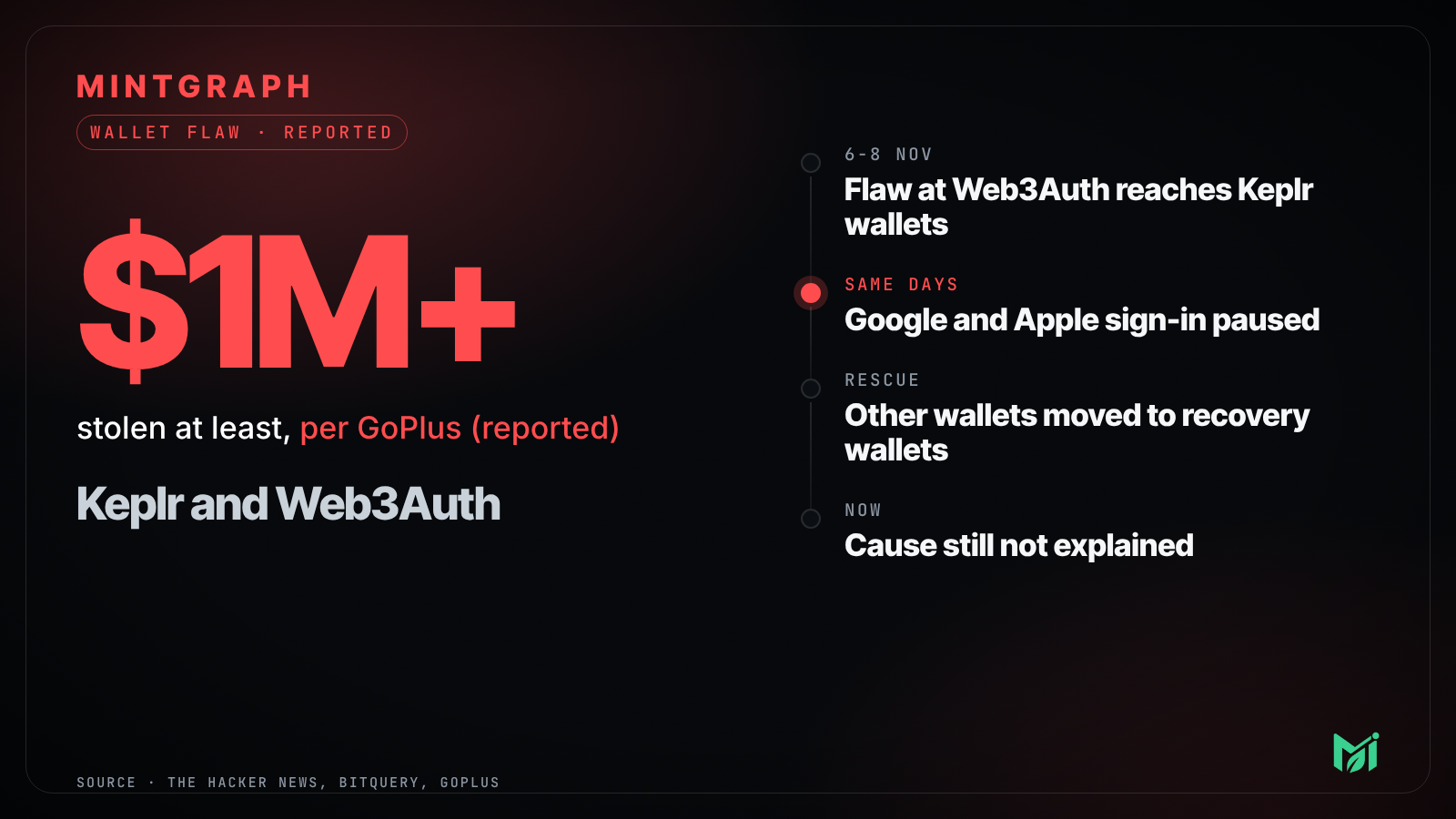 Keplr and Web3Auth: what the social-login wallet flaw means
A flaw at Web3Auth exposed Keplr wallets made with Google or Apple login. What is reported, what the companies advise, what it means for social-login wallets.
-
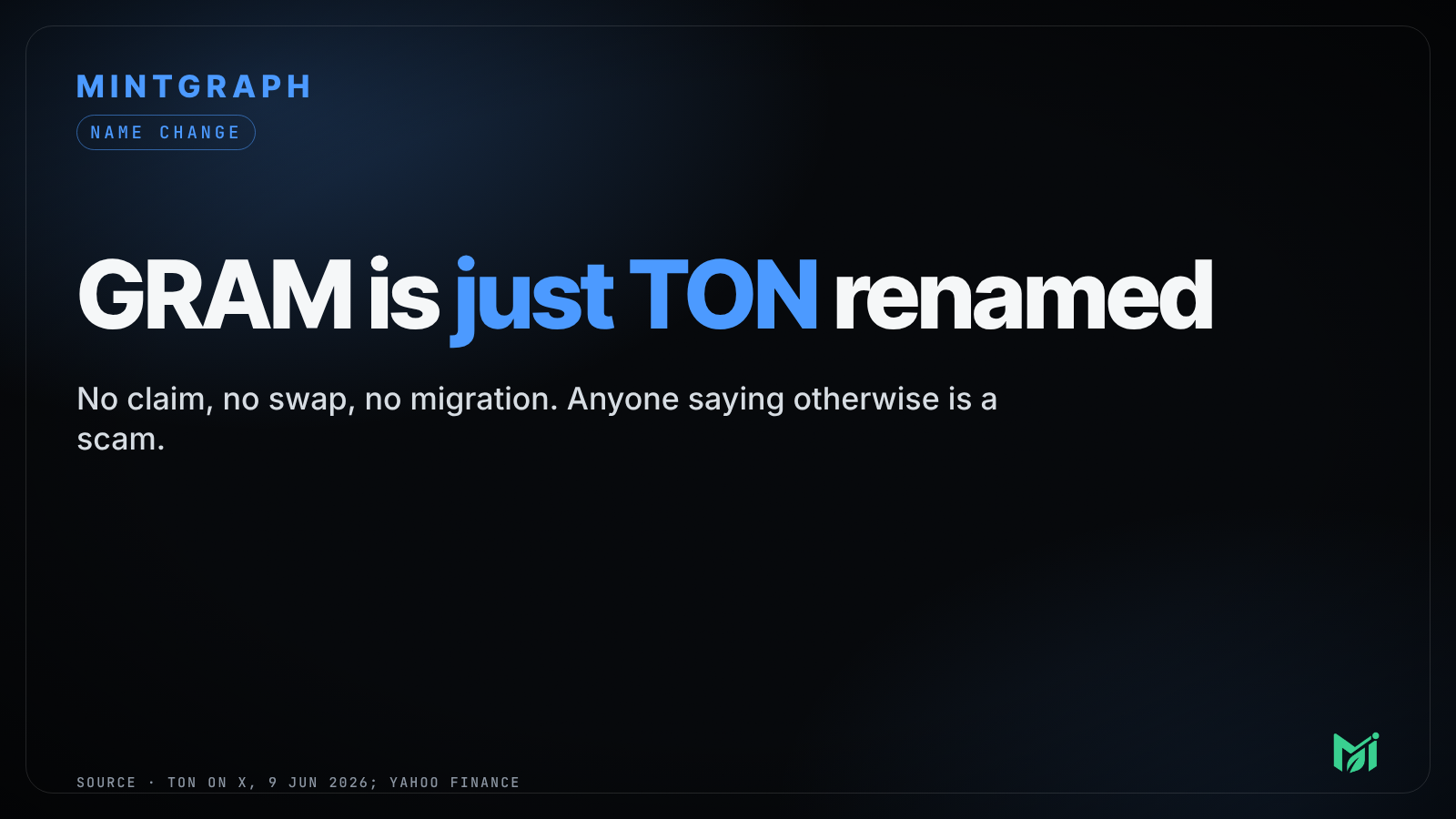 Is the GRAM airdrop legit? GRAM is TON, renamed
GRAM is Toncoin (TON) renamed on 15 June 2026. There is nothing to claim, swap or migrate. What is real, what is a scam, and how to check an offer.